Thursday, 11 January 2018

Disappreciating Nationalism
I love America and am grateful to be a citizen. However, I’m really more of a globalist than a nationalist. This is largely due to the progressive culture I’ve been immersed in most of my life, which tends to view nationalism and patriotism as slightly embarrassing, and even somewhat suspect.
                       - Steve McIntosh, "Appreciating the Upside of Nationalism"
Steve McIntosh is co-founder and president of the Institute for Cultural Evolution and a proponent of Integral Theory.  He recently posted an essay titled "Appreciating the Upside of Nationalism" (click here to read the full text).  The following is an expanded version of my response to his piece.
I usually find SM's take on cultural issues enlightening.  Not this time.  The essay, which compares and contrasts nationalism and globalism, is disappointing in its vague use of the terms and lack of rigor.  It offers no definition of 'nationalism' or 'globalism,' rendering the comparison of the two just about useless. 
To be blunt, I can think of almost nothing good to say about nationalism, usually understood as an attitude of positive regard towards one's own nation-state to the exclusion of others.  Expressed in a fan's rooting for a country's team in the Olympics, nationalism is harmless enough, I suppose.  But except as a rallying cry for overthrowing or preventing domination by another country, nationalism is irrational.  It is a form of ethnocentrism, by definition narrow and exclusive, too easily given to hostility towards other nations and ethnicities, often tainted by racism and/or religious bias.  Wars, ethnic cleansing, or genocide are too often the results, as in the horrors suffered by the Rohingya in Myanmar as I write, not to mention the horrors already perpetrated and more to come from Trump's "America First" project.
Despite the ascendancy of a xenophobic, extreme nationalist to the presidency and the white nationalism Trump has unleashed onto the streets of the nation's cities, McIntosh professes reluctance to give up "nationalistic patriotism,".  Both nationalism and globalism, McIntosh thinks, can be embraced if one understands them as an "interdependent polarity."  He means by this that nationalism requires globalism and vice-versa.  Healthy versions of both work interactively to produce optimal conditions for human life in the 21st century.  This is almost certainly wrong. 
Where is a healthy version of nationalism to be found today that is not at the same time naive about the historical reality of the nation-state?  Certainly not in the upsurge of right-wing populism, neo-Nazism, and various separatist movements around the world. Nor in the historically ignorant appeals of liberals to "the real values on which our nation was founded." The nation McIntosh loves was discovered by thieves and murderers, and founded by slaveowners. The US has never been totally honest about its history and has never come to terms with it, as Germany mostly has, for example.
Nationalism today is particularly irrational since most nation states are multicultural.  What exactly is the national identity of a Caucasian citizen of the United States, a Muslim immigrant, a Latino undocumented worker, a Member of the (black) Nation of Islam, a football player who takes a knee in protest about racist police, or a Trump voter who yearns for the return of the Confederacy?  What is a Canadian in an officially multicultural country that recognizes Quebec and aboriginal peoples as "distinct nations?"  National identity is a dangerous delusion, especially in a globalizing world that is making national boundaries irrelevant to economic activities and cultural interactions. 
If globalism means more than global integration of communication, transportation, banking systems, and trade deals - what is usually called 'globalization' - if it means instead a postmodern embrace of the entire planet and its inhabitants as the ultimate locus of ethical concern, then nationalism and globalism are not an "interdependent polarity."  Their relationship is hierarchical, as any integralist* of SM's stature should realize. Globalism in this sense transcends nationalism but also includes it in the way all postmodern phenomena include the modern.  That is not interdependence.  Nationalism can thrive quite nicely without globalism, as the current upsurge in right-wing populism worldwide demonstrates.  But the reverse is not true.  Globalism requires nationalism as the earlier stage out of which it has itself developed.  It includes it by accepting the stage structure of the nation state as a political necessity, but rejects the exclusionary, ethnocentric psychology and culture that it inevitably produces in the populations of less mature countries. 
At its worst, nationalism is a political ideology that, as philosopher A.C. Grayling observes, "is a recipe for disaster.....of more use to demagogues and separatists than anyone else" …. as evidenced by the current state of the world.
____________________
* For information on Integral Theory, click here. 

Tuesday, 9 January 2018

 Is Science a Branch of Philosophy?
"There is no such thing as philosophy-free science."  - Daniel Dennett
Every now and then, philosophers in our time have to circle the wagons against critics who announce the triumph of science and the death of philosophy.  You may be aware of the  obituaries announced by such science celebrities as Stephen Hawking, Neil deGrasse Tyson, and Bill Nye the Science Guy who famously declaims, "science rules."1  After all, they think, philosophy is vague, abstract, jargon-laden, fascinated with linguistic minutiae, too much in thrall to its own fusty history, and - worst of all - plagued with disagreements that are never resolved.  That's why philosophy makes no progress, whereas science progresses ever more rapidly in its accumulation of knowledge and provable theories about the world that have made possible the astonishing advances in technology that have improved the lives of all of us.  There is some truth in all this but also a lot of nonsense.
That scientists would pontificate foolishly about philosophy is bad enough, but it's especially annoying when a philosopher chimes in with a 'me too.'   One such is Professor David Livingstone Smith of the University of New England, who recently posted a piece on the Philosophy Talk blog titled "Truth and Progress in Philosophy," in which he professed helplessness when confronted with his students' frustration about not getting answers to philosophical questions.  "These students," he writes, "aren't frustrated because philosophy doesn't give them any answers.  They're frustrated because it gives them too many answers." [with no way of deciding which is correct. - brackets mine] Take, for example, the freedom/determinism issue.  There are three major positions that have been debated for decades, maybe centuries:  hard determinism, indeterminism, and compatibilism.2  Smith says he can't tell his students which one is true and explains in his blogpost why he thinks that question and all other philosophical issues must remain forever unresolved. 
Unlike Hawking and Tyson, however, Smith does not conclude that philosophy is useless.  He grants that philosophy cannot determine the truth about its own questions but professes to be unconcerned about that, because philosophy performs a different role which he apparently considers to be of redeeming value. Philosophy, he claims, "is in the options business, not the truth business."  Truth is the business of science.  Philosophy's job is merely to search out the many alternative ways of answering deep questions and to "spell out their implications."  
The first disaster to notice in this line of thinking is that it is logically incoherent.  The professor has committed what is known in the trade as a performative contradiction, a fallacy that occurs when a statement is contradicted by the act of speaking or thinking it.  "I am not aware of anything right now" is an obvious example.  
Smith's dictum has two parts: (a) philosophy is in the options business, and (b) philosophy is not in the truth business.  Now, owing to the fact that he develops a supporting argument for it, we can be pretty certain that Smith thinks (b) is true, not merely his opinion.  Trouble is, you can't assert as true a proposition that says it can't be asserted as a truth.  Descartes implicitly understood this when he hit upon his famous Cogito, ergo sum:  its denial - "I am not thinking; I do not exist," is refuted by the act of expressing or thinking it.  Philosophy is "not in the truth business" is self-refuting in the same way.  If it is true that philosophy is not in the truth business, then you cannot consistently engage in that very business. 
Once we understand this, we see also that in part (a), Smith commits the same fallacy (despite the fact that (a) is true!).  It should be clear what a disaster this is.  If he persists in this way of thinking, then none of his students or colleagues can ever take seriously what he says, and his continuing to teach philosophy constitutes a fraud.  Unfortunately, many thinkers agree with Smith, including some philosophers, with sad consequences for our culture at large. 
This could be the end of my critique, but, setting aside the contradictions, we can still learn some interesting things from the rest of what Prof. Smith has to say.  Here are the main points of his argument concluding that science wins, philosophy loses:
1. Science has evidence and reliable methods.  That's why it has made spectacular progress.
2. Philosophy lacks both evidence and reliable methods.  That's why it has made little progress.
3. The problem is that most philosophers have not understood their mission:
"The question of whether philosophy has progressed can only be answered by answering a deeper question. What’s the goal of philosophy? What are we after—or rather, what should we be after—when we’re doing philosophy? Whatever the answer to this question is, it’s not the pursuit of truth. …. Its job is to show that there are many ways of addressing a problem, and to spell out the implications of these alternatives.  …. Finding lots of answers, without having the resources, all on its own, to decide which of them are the right answers is what philosophy is all about."
Besides being a performative contradiction, this view of philosophy plays right into the hands of critics like Hawking, Tyson, and others who think philosophy is dead or useless.  What's the point of "finding lots of answers" and endlessly debating the alternatives when none of them can be proved a winner?  Waste of time.  Money spent on philosophy departments could be used instead to fund worthy scientific projects.
The negation of philosophy constitutes an act of rational suicide, a disaster at a time when we are led to believe we live in a "post-truth" world of "fake news" and "alternative facts."  As we will see, if there are no philosophical truths, there are no scientific truths either and therefore no truth at all; only opinions and no one's opinion is preferable to any other.  Fortunately, there is no good reason to buy into this postmodern delusion.  Let's examine the argument one point at a time:
1. Science has evidence and reliable methods.
True.  The scientific method, with its rejection of religious and other types of dogmatic authority, its insistence on careful observation, experimentation, and peer review, is undeniably the most powerful instrument for understanding the natural world ever developed by humans.  Let's not exaggerate its reliability, however.  The triumphs of science are too often allowed to obscure the many blind alleys and failures working scientists have always had to suffer through before making a breakthrough.  In fact, failures outnumber the successes, and progress is achieved in fits and starts, not in one smooth arc of accumulation.  Still, science's record of achievement and progress speaks for itself.
2. Philosophy lacks both evidence and reliable methods.  That's why it has made little progress.
One at a time.  "Philosophy lacks evidence?"  The assumption here obviously is that philosophy, as commonly understood today, doesn't have the kind of evidence that science has, namely hard observational and experimental evidence.  Well, no it doesn't, because philosophy does different kinds of work that require different kinds of evidence.  Mathematics doesn't have scientific evidence either, but no one thinks mathematical reasoning doesn't produce truth.  By contrast, lots of people think philosophy produces no truth, but that's because they don't know the nature or scope of the work philosophers actually perform, and therefore do not know what counts as evidence in philosophical reasoning.  Clearing up these misunderstandings requires turning to my next question.
"Philosophy has no reliable methods?"  This news would come as a surprise to the authors of such books as The Philosophers' Toolkit, by Julian Baggini and Peter Fosl, which describe a multitude of strategies and heuristics available to philosophers, many of which have been built up over thousands of years.  Philosophical methods exist in abundance; they just happen to be different from the methods employed by scientists.  They are strategies for careful thinking.  For example, logic, which was invented by philosophers, provides us with a wealth of knowledge about how to distinguish good from bad reasoning.  
In addition to those formal techniques, philosophers have devised numerous heuristics such as thought-experiments, analogies, reductio ad absurdum disproofs, counter-examples, fallacy identification, and many others which have proven their effectiveness for analyzing and evaluating the ideas of any discipline or type of discourse, including mathematics and science.  Science itself relies on many of the principles and strategies of logic.   
Ironically, scientific method was worked out by philosophers or by thinkers who were both philosophers and scientists (Francis Bacon, Galileo, Descartes), not by specialists in physics or biology.  Think about what this means:  scientific method itself is a reliable philosophical method!  Which leads me to my next criticism of the debunkers of philosophy.
Never the twain shall meet or joined at the hip?
All the critics who think philosophy must leave the pursuit of truth to science assume a sharp distinction between the two.  Science discovers truth; philosophy does not.  On what grounds is this strong distinction made?  Certainly not the testimony of history. For at least 2000 years, no such distinction was made by thinkers who indulged their curiosity about the world and human life.  Philosophy was traditionally considered the rational search for truth and wisdom in the broadest sense of those terms.  Philosophers inquired about everything.  The study of nature - science to us - was merely one branch of philosophy; specialists like Isaac Newton were called 'natural philosophers.'  Other major branches - logic, ethics, etc. - were known to be different in some ways from one another, but all were understood to be parts of the largest project in human thinking, the pursuit of knowledge and wisdom.
Only in the modern era from the 19th century onward, owing partly to the very scientific revolution that philosophical geniuses made possible, were the two domains professionalized and eventually departmentalized in universities.  That led in our time to a decree of divorce: "science rules," independent and triumphant; philosophy muddles along doing who knows what.  Let us not be deceived by this decree absolute.  It is spurious.
The historical connection has never been entirely severed, as evidenced by the enormous attention given to philosophy of science in the last 100+ years. 
In our time, the triumphs of modern science can be honored without divorcing them from their ancient parent.  In fact, no such divorce is possible. All the major sciences today - physics, chemistry, biology, etc. - rest on assumptions that cannot be proven by their methods. That is the meaning of Daniel Dennett's claim that there is no philosophy-free science.   For example, scientists assume that there is a pre-given world of matter and energy that can be studied objectively; that the future will resemble the past; that every event has a cause; that religious faith has no role to play in the study of nature.  None of those can be validated by the methods of science.  Working out the meaning of such assumptions and whether they are valid or not are tasks that belong to philosophy. The scientific method itself - its nature, its claim to validity, and its limitations cannot be studied by means of observation and experiment.  It is not a fact to be observed but rather a set of ideas needing interpretation and validation.  Investigating ideas is the business of philosophy. 
Many other questions about science deserve our attention.   Here are a few examples. What is the difference between a hypothesis and a theory?  What is an explanation?  What is the value of string theory?  Are the laws of nature eternal or are they subject to change?  Is a physical 'theory of everything' possible? Do electrons exist?  Can neuroscience explain the mind?  Is it morally acceptable for psychologists to assist in a torture program? (It happened - at Guantanamo.) Who should own Henrietta Lacks's cancer cells?  If these don't look to you like scientific questions, you would be correct. There is no scientific procedure that could be used to answer them.  Why?  Because the sciences of nature are necessarily tied closely to empirical observation, and the aforementioned questions are about relations of ideas, not about observable things and events.  They are philosophical questions, raised and discussed in the domains of epistemology, metaphysics, and ethics.
It should be clear by now that philosophy and science are joined at the hip.  Science was born of philosophy and is grounded on philosophical assumptions.  However, the relationship is not symmetrical.  Philosophy can make of science an object of investigation and criticism, but the reverse is not true.  There is philosophy of science but no science of philosophy, nor can there be for the reasons I have stated.  Oh, sure, celebrity scientists often dismiss philosophy or object to one or another of its claims. but when they do so, they are speaking about ideas, not about nature, and that means they are speaking as philosophers.  Switching their hats like that is fine, but it would be nice if they knew what they are doing.
Given the close relationship between science and philosophy described above, I make the following bold claim:
Science is the empirical branch of philosophy.
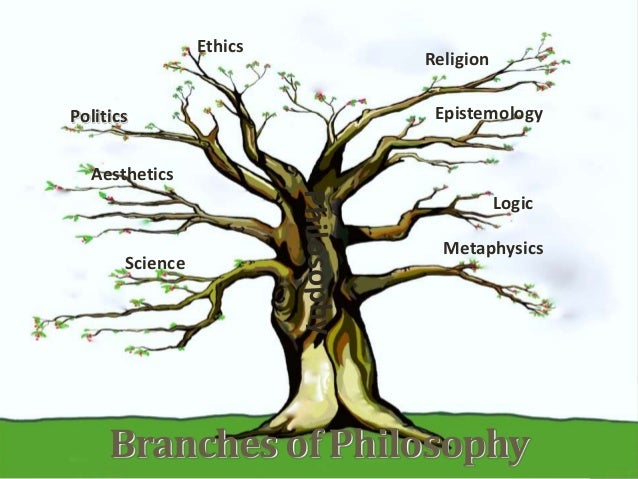
Image result for branches of philosophy image

If this is right, then all the truths that science has discovered are also philosophical truths, and all the progress that science has made is also philosophical progress.  If you think this makes an incomprehensible mush of philosophy and science, you would be wrong. None of the above implies that there is no useful distinction to be made between philosophy and science.  There is, but it is not what I call the Strong Distinction, the one advocated by Smith, and it is certainly not the delusional Extreme Distinction between living science and dead philosophy made by philosophy-free scientists.   The proper distinction, I contend, is a Weak Distinction between conceptual philosophy and empirical philosophy ('science' for short).  The former uses conceptual methods to study ideas.3  The latter uses philosophical ideas and methods to study the natural world.  Even that distinction may not have made much sense to Aristotle, but it does now owing to the need for specialized disciplines in this increasingly complex world.  Science has earned the right to to pursue its important but narrow ends more or less independently, and philosophy, too, has a full-time job dealing with the many confusions created by the same complexity.  Among those, unfortunately, is the cluelessness of those who think "science rules."
Allowing only the Weak Distinction between philosophy and science shows us how science can be free to pursue its truth without denying the integrity of philosophy.  I have argued that the Strong Distinction is unwarranted: there is neither a historical nor a logical basis for making the cut between science/truth on the one hand and philosophy/options (only) on the other.  In both we find the pursuit of truths, albeit truths of a different kind.  To insist on the Strong Distinction is to commit philosophical suicide, leaving science with no concepts for understanding itself, no way to defend itself against its detractors, and no ethical monitor to keep it out of mischief.
I sent an email to Dr. Smith containing a shorter version of the above considerations.  His response two days later:  "Cool objection."
_____________
Notes:
1  Apparently, after timely instruction from a philosophy student, Bill Nye has recently changed his mind.  You can read about his admirable about-face here.
  For my discussion of the topic, see my blogpost of September 17 of this year, "How free do you need to be?"  You can access it here.  You can read Prof. Smith's blogpost here.
3     Does conceptual philosophy discover truths all on its own?  You bet.  I have highlighted a few of them in this essay, e.g. that to deny truth in philosophy is to commit a performative contradiction.  For many others and for an account of how philosophy has made progress over the centuries and still does today, see Richard Carrier, "Is philosophy stupid?" here. 

Monday, 13 November 2017


On Subjectivism:
My Opinion Is As Good As Your Truth

    "There is nothing so ridiculous that has not at some time been said by some philosopher."              - Oliver Goldsmith
At our November 8th meeting where we discussed "Post-truth," the OED's 2016 "Word of the Year," we were instructed by some of our friends that truth doesn't exist.  More precisely, the claim was that objective truth does not exist. What we call 'truth' is really just subjective opinion, or "truth as seen by you." "There are no facts; only interpretations."  What you believe is true for you, and what I believe is true for me. Everyone is entitled to their opinion, and one opinion is as good as another.  What people call news is just "fake news," if I don't like it. Everyone is biased.  There is no way to decide who is telling the truth about anything.  For every fact, there is an "alternative fact."  That's just how it is.  Hillary Clinton won the popular vote? - that's just your opinion.  Maybe so, maybe not.  Trump claims he won it, and who are we to say he is wrong?  The earth is flat?  If you say so; why not? 
This sophomoric point of view is called epistemological or cognitive subjectivism (close cousin to epistemological relativism).  It's a 'theory' that has gained a strong following in the last 50 years or so in western culture, thanks to postmodern philosophy and social media, producing as their final triumph the election of Donald J. Trump as the President of the United States.  Thanks to the arch-subjectivist Trump, we are now officially living in a "post-truth" age.  Radical postmodern epistemology is moribund now in the halls of academia, but its popular version lives on in the thinking of millions of our fellow citizens, especially in social media where mere opinion seems to be all that matters.  Try to argue for something you think is true in 140 characters.

Opiniona belief or judgment about something, not necessarily based on fact.
There is, of course,  a subjective aspect to any thought we may entertain, because thinking is is carried out by conscious persons or subjects.  If I think sharks are endangered worldwide, that opinion subjective because it's mine.  I'm the one who believes it.  Every opinion takes place first in somebody's mental world.  That's the realm of subjectivity: our thoughts, imaginings, feelings, dreams, sensations.  In that respect, subjectivists are right to claim that all beliefs or statements about the world are subjective opinions.  Thing is, some of them are also true.  Sharks are endangered worldwide and I can produce the facts to support my opinion.  It's not a mere opinion Opinions that are true have an objective aspect as well as a subjective.  Of course, if I do not know the facts about sharks, in that case I can offer only a subjective opinion.
Now subjectivists may not roll over before this commonsensical objection.  They may claim that the so-called 'facts' are also nothing more than opinions, so we will need to come up with a stronger, more philosophical critique. 
Our search will not be in vain.  Subjectivism and other radical relativisms collapse under careful scrutiny.  First up is a practical problem,  We can be quite confident that subjectivists do not act on their own theory in the real world.  When checking out at the grocery counter, they don't want to hear from the clerk that in her opinion the amount owed is x number of dollars.  They will insist on the actual total, demanding a digital recalculation, if necessary.  If diagnosed with a serious illness, they will seek a second opinion in an attempt to get a better handle on the truth about their condition
Secondly, subjectivism is pseudo-philosophy, passing itself off as the real thing.  Philosophy has always been understood as the love or pursuit of wisdom but is more precisely defined as reflective "inquiry into knowledge, truth, reality, reason, meaning, and value" (A.C. Grayling, Ideas That Matter).  Since there can be no wisdom and no rational inquiry without truth, subjectivism is not really a philosophical theory at all, but rather a kind of anti-philosophy, a negation of the philosophical project altogether and, by the way, of science as well.  
However, the main philosophical problem with subjectivism is that it is self-defeating.  The subjectivist wants us to believe that there is no truth, only opinion, but he does not offer his view as a mere opinion.  No indeed.  He wants us to accept it as a truth, an objectively true generalization about all knowledge claims made by anyone anywhere.  Subjectivism, he insists, is the one true or correct way to think about beliefs.  But his theory says there is no truth, no true beliefs about the world, only opinions.  This is incoherent.  The subjectivist is caught in a performative contradiction, a trap of his own making.  If he believes his theory, he can't teach it, and if he teaches it, he can't believe it.  
That is why during the discussion we heard no argument in support of subjectivism, only a loud insistence that "There is no objective truth; only subjective opinions!"  There can be no supporting argument, of course, for that would require reasons leading logically to the subjectivist's conclusion, reasons which would have to be true in order to be supportive of the theory.  Moreover, all logical reasoning presupposes certain a priori truths, such as the rule 'Modus Ponens': If a statement P implies Q, and P is true, then it follows necessarily that Q is true.* But the theory says there is no truth, so there can be no logic, no true reasons, and the whole project collapses into nonsense.
It may often be a difficult needle to find in the global haystack of opinions, but …


from X-FILES (of course)

Postmodern subjectivism/relativism seems to be fading from the academic world these days (See, e.g.,The Passing of Postmodernism here), so most discussions of relativism these days are focused on moral relativism.  For my treatment of that topic, see the next post on this site.  

Critique of Ethical Relativism
Ethical relativism is the philosophical theory that there is no such thing as objective moral truth.  All judgments about right and wrong, good and evil, are relative to cultural traditions.  The version of ER discussed last night (PC meeting, December 2013) is based on a generalization I call Descriptive Relativism 1:  different cultures hold conflicting beliefs about right and wrong.  That is a well-known fact which does not provide a basis for any interesting ethical conclusions.  Different cultures hold different beliefs about all sorts of things:  origin of the world; causes of diseases; the best form of government, etc.  So what?
A more sophisticated premise would be this one, call it Descriptive Relativism 2:  different cultures hold conflicting fundamental beliefs about right and wrong.  The distinction is important because many apparent moral differences among cultures disappear when they are traced back to their deeper ethical assumptions.  For example, the Aztecs believed human sacrifice was justified, because they thought it was necessary to ensure the sun would rise each day.  We agree with that value judgment but disagree about the human sacrifice, because we know sunrises are governed by physical laws and are entirely unaffected by anything humans might do here on earth, even dramatic rituals like human sacrifice.  Both Aztecs and we moderns agree that policies which benefit our societies in important ways are good.  That's a shared fundamental value.  So the dispute is about factual assumptions about how the universe works, not about fundamental values.
For a contrasting example, consider the Navajo game called Chicken Polo.  They bury a chicken in the ground up to its neck and then compete on horseback to see who can knock the chicken’s head off.  They freely admit that chickens feel pain but see nothing wrong in the game nonetheless.  Our culture, of course, regards such activities as morally wrong, because we hold as a fundamental principle that it is wrong to cause pain to sentient creatures for trivial reasons.  The Navajos do not hold that principle, so the cultural difference in this case is fundamental.
A proper discussion of ethical relativism must focus on Descriptive Relativism 2.  The question then becomes: if different cultures hold differing fundamental beliefs about right and wrong, good and evil, does this fact entail ethical relativism?
Descriptive relativism in either version is an empirical generalization, not an ethical theory.  Ethical relativism is a theory about moral truth.  Some versions of it use descriptive relativism as a basis for ethical relativism.
Using DR2 as the main premise, here is how the argument for ethical relativism goes:
Basic Argument:
Different cultures hold conflicting fundamental beliefs about right and wrong (DR2).
Therefore, all moral values are relative.
The conclusion can be stated in several ways:
a. Therefore, actions believed to be right in a given culture really are right, and those same acts, if thought to be wrong in another culture, really are wrong.
b. There are no grounds for choosing between conflicting moral beliefs.
c. There are no universal ethical principles, no ethical truths, no ethical knowledge.
d. It is wrong to judge another culture’s morals by our own standards.
Here is an interesting, although inconclusive, observation:  most relativists do not really believe their own theory.  Ask a relativist if she is really willing to accept that, if some culture believes that torturing children is morally permissible, then torturing children really is ok in that culture.  The response to my asking this question is usually dead silence.
Here are the more philosophical objections to ethical relativism (ER):
1.  ER can’t account for the fact that we reason and argue with one another about value issues. If there is not at least one ethical constant, we could not reason about values at all.
2.  ER can’t explain the many fundamental ethical similarities among various cultures, e.g. the universal prohibition against murder.
3.  There is a lot of agreement among cultures about basic norms.  If the Basic Argument were valid, we would expect far more basic disagreements than exist in fact in order to justify the conclusion “All values are relative.”
4.  How to identify a culture?  (pluralistic societies, subcultures, minorities?)  How many members of a group are required to establish a cultural norm?  Is a motorcycle gang a culture?  Is the Muslim minority in Canada a culture?  Is there an authentic Canadian culture at all?  In a multicultural nation, whose culture gets to decide morality?
5.  Why should culture be the arbiter of moral truth?  Why not “All values are relative to the whims of the king?” or “All values are relative to the preferences of each individual (subjectivism)?”  Standard ER is unable to answer this question.
6.   The truly fatal flaw in ER is that the Basic Argument is invalid, a logical fallacy.  The premise is an empirical generalization, a statement of fact, whereas conclusion (a) is a statement about values.  It is a widely accepted axiom in philosophy that we cannot validly infer a conclusion about right and wrong from a premise that is merely factual.  For example, the fact that stealing is common does not entail that stealing is morally right.  Thus, the conclusion of the Basic Argument does not follow from DR2. 
   Conclusions (b) and (c) also are fallacious, because they are epistemological statements, which also cannot be inferred from an empirical premise.  For example, in the case of (c), the argument is analogous to reasoning that because people at various times in history have held contrary beliefs about the shape of the earth, there is therefore no truth about the shape of the earth. Analogously, just because the Navajo and most Americans disagree about the morality of Chicken Polo does not imply there is no truth about Chicken Polo being right or wrong. Conclusion (d) is wrong for a different reason:  it assumes some standard of right and wrong, thereby contradicting (b).
These arguments constitute a serious challenge to ethical relativism.  But it gets worse,  Consider the more radical attack by Julien Beillard  in his essay “Moral Relativism is Unintelligible." He argues there that it makes no sense to say that "morality is relatively true.”  Philosophy Now, July 15, 2013.
Beillard begins with the usual critique of cultural relativism based on DR 1.  He then points out that mere disagreement of opinion - in any field at all - does not imply that there is no objective truth about the issues.
Then he makes the interesting argument that ethical relativism is self-defeating.  For, if the position is based on the fact of deep and abiding differences of opinion, there arises the problem that ethical relativism itself is an object of considerable deep disagreement among philosophers.  Does that mean that ethical relativism itself is not objectively true but only relatively true?  Seems so.
However, JB's principal aim is to go beyond showing that ER is false, implausible, or self-defeating.  He wants to show that it is unintelligible, i.e. that there is no concept of truth that can be used to frame the thesis that moral truth is relative to the standards or beliefs of a given society (or king or other individual).   Check out the article for more on this interesting approach.
Whether a consensus will develop around this approach remains to be seen, but it looks like another serious blow against ethical relativism.

Tuesday, 7 November 2017

Heap or No Heap: A Possible Solution
Philosopher Timothy Williamson begins his essay on vagueness with the following thought-experiment:
"Imagine a heap of sand. You carefully remove one grain. Is there still a heap? The obvious answer is: yes. Removing one grain doesn’t turn a heap into no heap. That principle can be applied again as you remove another grain, and then another… After each removal, there’s still a heap, according to the principle. But there were only finitely many grains to start with, so eventually you get down to a heap with just three grains, then a heap with just two grains, a heap with just one grain, and finally a heap with no grains at all. But that’s ridiculous. There must be something wrong with the principle. Sometimes, removing one grain does turn a heap into no heap. But that seems ridiculous too. How can one grain make so much difference? That ancient puzzle is called the sorites paradox, from the Greek word for ‘heap’." 
-  Timothy Williamson, Aeon, "On vagueness, or when is a heap of sand not a heap of sand?" *
Williamson is right: there is something wrong with the principle "removing one grain does not turn a heap into no heap."  One solution proposed by some contemporary philosophers is to replace traditional logic by something called 'fuzzy logic.'  Curious readers can consult Google for more information about fuzzy logic, if they wish, but TW thinks that approach doesn't work, and besides, there is nothing broken here that needs fixing.  He insists that traditional logic works just fine.  The problem confronting us in the sorites paradox, he writes, is vagueness and ...
"Vagueness isn’t a problem about logic; it’s a problem about knowledge. A statement can be true without your knowing that it is true. There really is a stage when you have a heap, you remove one grain, and you no longer have a heap. The trouble is that you have no way of recognising that stage when it arrives, so you don’t know at which point this happens."
I agree with TW that the common use of the word 'heap' is loose and vague, but he throws in the towel too soon.  Isn't it part of the job of philosophers to try to clarify troublesome terms so that they might better serve us in answering tough questions?  TW declines to do this and so leaves us with the puzzle unsolved on account of terminal vagueness.  I will argue here that there is a way of recognizing the stage when no-heap arrives and that the solution requires no exotic logical moves, just one additional concept.  Here we go.
As in many other discussions of a philosophical problem, it is legitimate here to ask for a definition of the term 'heap.'  At the outset it is vague indeed, and leaving it vague practically guarantees that no logical solution will be found.  But why should we accept the initial vagueness? 
Before offering a definition of 'heap,' I want to contrast it with another, not-so-vague term:  holon. A holon (the term was first coined by Arthur Koestler) is any entity that is a whole and also a part of a larger whole.
Holons have a number of characteristics, but the crucial one for this discussion is that every holon has internal structural integrity or agency, that is, an internal force or principle that enables the holon to resist dissolution into its component parts.  When a holon becomes part of a higher holon, the principle of functional organization of the lower is conferred or imposed by the higher holon.  For example, a protein molecule is a holon with its own agency, and it is also part of a higher holon, a cell, which organizes the activity of the protein for its own benefit.  If the cell moves around, the protein molecules and all the rest of the cell's component parts move with it; none of them can stay behind or go off on their own.  For another example, an atom is a holon within which the strong and weak forces keep the component parts - protons, neutrons, and electrons - together as a functioning unit.  The higher-level holon imposes its own agency on the lower components.  Thus, when the atom changes its location in space, the whole atom moves.  None of the components are lost or left behind.  (Nuclear fission is an exception.) 
Now we can define 'heap' as any collection of holons whose agency is not superseded by the higher agency of the collection.  Each member is a holon, but the collection is not a higher holon; it has no agency of its own and hence no power to organize the activities of its members; no power of self-preservation.  So if a member holon disappears or moves to another location, the rest of the collection does not disappear or move with it.  Any such collection we can call a 'heap.'
This definition provides the basis for a solution to our puzzle.  Recall Williamson's principle:  "Removing one grain doesn’t turn a heap into no heap." By defining 'heap,' we have removed the vagueness from the principle.  Since the principle is no longer vague, there's a greater chance that it can be used to solve our puzzle.  Let's take a look.  
We begin with our pile of sand.  It is obviously a heap, but now we understand precisely what that means:  it is a collection of grains, each of which is a holon whose agency is not subordinated to the agency of a higher holon.  Next we apply the principle: removing a single grain of sand doesn't turn the heap into no heap.  The remainder is still a heap - a slightly smaller heap, but still a heap.  Remove another one and the heap is still a heap, not a no-heap.  Continue removing one grain at a time.  The heap becomes smaller and smaller.  At what point does it cease to be a heap?  In the original puzzle, there seemed to be no clear answer to the question; hence the paradox.  With our  new definition of 'heap,' there is a precise answer:  as grain after grain of sand is removed, we eventually arrive at just two grains.  Is it still a heap?  Yes!  It is still a collection of holons whose agency is not taken over by a higher holon.  It's a very small heap, but still a heap.
Now remove one more grain.  Do we still have a heap?  No, because there is no longer a collection.  No collection, no heap.  The remaining grain of sand is a holon, standing alone with its magnificent self-contained agency, no longer a member of a collection with which it was only loosely connected in the first place.  So the answer I propose to our puzzle is that a heap ceases to be a heap when the number of member holons has been reduced to one.  In other words, the boundary between heap and no-heap is the boundary between the last grain of sand and the second-to-last.
This solution seems sound, but it requires us to amend our guiding principle to read "removing one grain does not turn a heap into no heap unless there are only two grains in the heap.
_____________
* Click here to read T. Williamson's essay.


Thursday, 21 September 2017

How Free Do You Need to Be?
Philosopher Daniel Dennett posed this question to someone who asked him whether humans have free will.  I borrowed it for a discussion of the topic at our recent Philosophy Night Live meeting.  The precise topic was "Why do we need ethics if we live in a deterministic world?"  The conversation focused mainly on the freedom/determinism issue, and we never got to the ethics part of the question.   More on that later. *
Meanwhile, let's take a closer look the general issue and then at Dennett's interesting question.  Determinism is simply the commonplace view that events in the world have causes; they can at least theoretically be explained by identifying the previous relevant events or conditions that preceded them.  A traffic accident causing injury and property damage, for example, was the result of reckless driving on the part of a drunken driver.  But other conditions were necessarily in play as well: the car he was driving (no car, no accident), the driver's failure to use a safety belt perhaps; the failure of an air bag; the unfortunate presence of another vehicle which was struck in the incident, etc.  (No event has just a single cause.)
Determinism bothers many people, because it seems to rule out free will.  Most of the time they feel they are acting freely.  On the other hand, belief in free will seems to imply that some events, e.g. deliberate human choices, have no cause; they are exempt from the universal law of cause and effect.  But that seems absurd: a human act that had no cause would be simply random, unexplainable, and how would that be different from an act of insanity?  How to resolve this paradox?
One solution is offered by libertarians (not the political variety).  Libertarianism is the view that, although most of our everyday actions are automatic or semi-conscious, the result of habit or physical reflexes and therefore determined, at least those actions that result from careful, rational deliberation about the available alternatives (e.g. Which university should I attend?) are not determined by any pre-existing conditions.  The self, libertarians insist, is the sole cause of the decision.
But who or what is the self, and how could anyone know for sure whether even their most carefully considered decisions were not the result of pre-existing conditions?  Modern depth psychology has exposed too many of our unconscious motives, biases, suppressed emotions, and other 'shadow' material for us to ever be very confident about how free any of our choices really are.  Not to mention the neuromaniacs who think everything humans do is determined by fired-up neurons in the brain.  Libertarianism is unconvincing. 
Let's be honest.  In everyday life we are all determinists.  If, after investigating a burglary at your home, the police told you the alleged burglary had no cause; it just happened; your stuff just vanished - no burglar, no other explanation, forget it, cased closed - you would probably sue the department.  Our common intuition is that everything that happens has a causal explanation, even if we never discover in a given case what the explanation is.
To be free or not  to be free - that is the question, a question that is as old as philosophy.  At the meeting, we briefly discussed a modern interpretation that seems to offer a way out.  The theory, favored by most philosophers today, is called compatibilism (or sometimes soft determinism).  The basic insight of this theory is that the traditional debate sets the bar for defining 'freedom' too high.  This was the point of philosopher Daniel Dennett's question, "How free do we need to be?"  How free, that is, to satisfy the demands of morality and legal accountability and our subjective feeling of being able to choose among real alternatives?  The answer, compatibilists think, is not the absolute freedom insisted on by libertarians which violates the principle of causality, but rather a type of freedom that exists when and only when certain conditions are present in a given situation.
Compatibilitists are determinists.  They agree that human actions, like all other natural events, are determined by pre-existing causes or conditions.  In humans, one of the causal factors is, in some cases, a process of careful deliberation.  Faced with a choice of A or B, we consider both for a while, reflecting on the relative merits.  Eventually, our feelings about A win out, and that's what we end up choosing to do.  We choose A because that's what we want to do.  And that, says the compatibilist, is exactly what freedom is: the ability to choose and act according to our desires. Call this conditional or circumstantial freedom.
Thus, compatibilists disagree with libertarians about the meaning of 'freedom.'  They claim that 'absolute freedom' is a useless fiction.  Conditional freedom is the only kind we need for understanding our practical lives, and it is compatible with determinism.  To be conditionally free means you are in control of your choices.  In the moment of free decision, there is no external coercion and no internal compulsion (psychological disorder).  You choose A because you have rationally compared it to B, and A is what you want to do.  That is why you feel free in the moment of decision.  When people have this kind of control, we say they acted freely and are responsible for what they do.  But to be free in this sense does not mean your action is uncaused or generated out of nothing by a transcendent agent, self, or soul, as libertarians claim.  All decisions and actions are conditioned.  You could have chosen B instead of A, but only if one or more of the conditions had been different.
Perhaps the easiest way to grasp this point is to see that what ultimately trips the switch of a choice, the final factor in the process of making a decision, is the strongest feeling or desire that shows up at the end of reflection.  "A or B? …...Hmmm……...not sure…….. Ah! I have it - A feels right.  That's what I'll do."  Yes, you could have chosen B, but only if the strongest desire in the moment had been different.  In the end our choices are caused by our desires, but desires don't appear out of nowhere like some random quantum events, they have causes, too, some of them known to us - habits, aspects of our character - some of them unknown, buried in the subconscious mind.  But all have a causal history; we can't create our desires out of nothing.  And that fact implies determinism.
This should not bother us, however,  Compatibilists say that conditional freedom is the only kind of freedom we need or care about.  It is all we need to judge people as responsible or not responsible for what they do, and it satisfies the justice system as a criterion for determining guilt or innocence.  Demanding more freedom than this seems metaphysically absurd; it's like demanding to be God, to be able to act ex nihilo.  As philosopher John Dewey once said, "What men have esteemed and fought for in the name of liberty is varied and complex, but certainly it has never been a metaphysical freedom of will."  
_____________

* The short answer is that regardless of how we decide the freedom/determinism issue, as social beings we need to know how to distinguish right from wrong actions, and that's what ethics is about.